
Scalestack
Series A
AI
About Scalestack
An AI-powered platform serving Fortune 500 clients like MongoDB, Typeform, and Remote, enabling RevOps teams to build intelligent AI agent workflows for data enrichment and GTM automation at scale.
Business Problem
Scalestack operated as a high-touch consulting service where internal teams built workflows for clients. To scale, they needed to become a self-serve product where RevOps professionals could operate independently. However, zero design maturity created critical adoption barriers:
Design Without Strategy
No design function, user research, or framework connecting decisions to business goals. Features shipped weekly based on ad-hoc decisions rather than validated user needs.
Unusable AI Agents
AI agents autonomously orchestrate data across 60+ integrations and make intelligent routing decisions. The builder interface was so technically complex that only internal teams could use it. Zero external customer adoption blocked the entire business model shift.
Manual Workarounds Required
Despite having a platform, consultants still delivered results via Google Sheets because data management UX was broken. Users couldn't monitor workflow status without checking every 15 minutes.
Strategic Paralysis
With 25+ initiatives on the roadmap and no prioritization model, the team was polishing features rather than unblocking the self-serve transformation the business required.
This created a critical gap: powerful enterprise automation trapped behind interfaces that prevented the business model shift needed to scale.
Role & Leadership Impact
As the first design hire and Fractional Chief Design Officer, I built the design function from zero while delivering immediate business impact through strategic roadmap prioritization and focus.
Strategic Prioritization
Introduced a problem-first framework that mapped all 25 initiatives to business objectives. Made the critical call to focus on 3 high-leverage initiatives that would unblock the entire self-serve transformation rather than polishing 25 existing features.
Design Systems Thinking
Established reusable patterns and component across all initiatives. Built for self-serve scale by ensuring consistency through documented design principles, standardized interactions, and engineering partnership on implementation standards.
Internal Team Mentorship
Evolved the PM from feature spec writer to problem-solver, taught engineering teams user-first language, and advised the CEO on product direction. Built frameworks and processes that outlasted my engagement, enabling successful handoff to incoming full-time designer.
Strategic Solution
I established a problem-first framework requiring user context, competitive analysis, and quality gates. Then focused on three high-impact initiatives:
AI Agent Builder Redesign
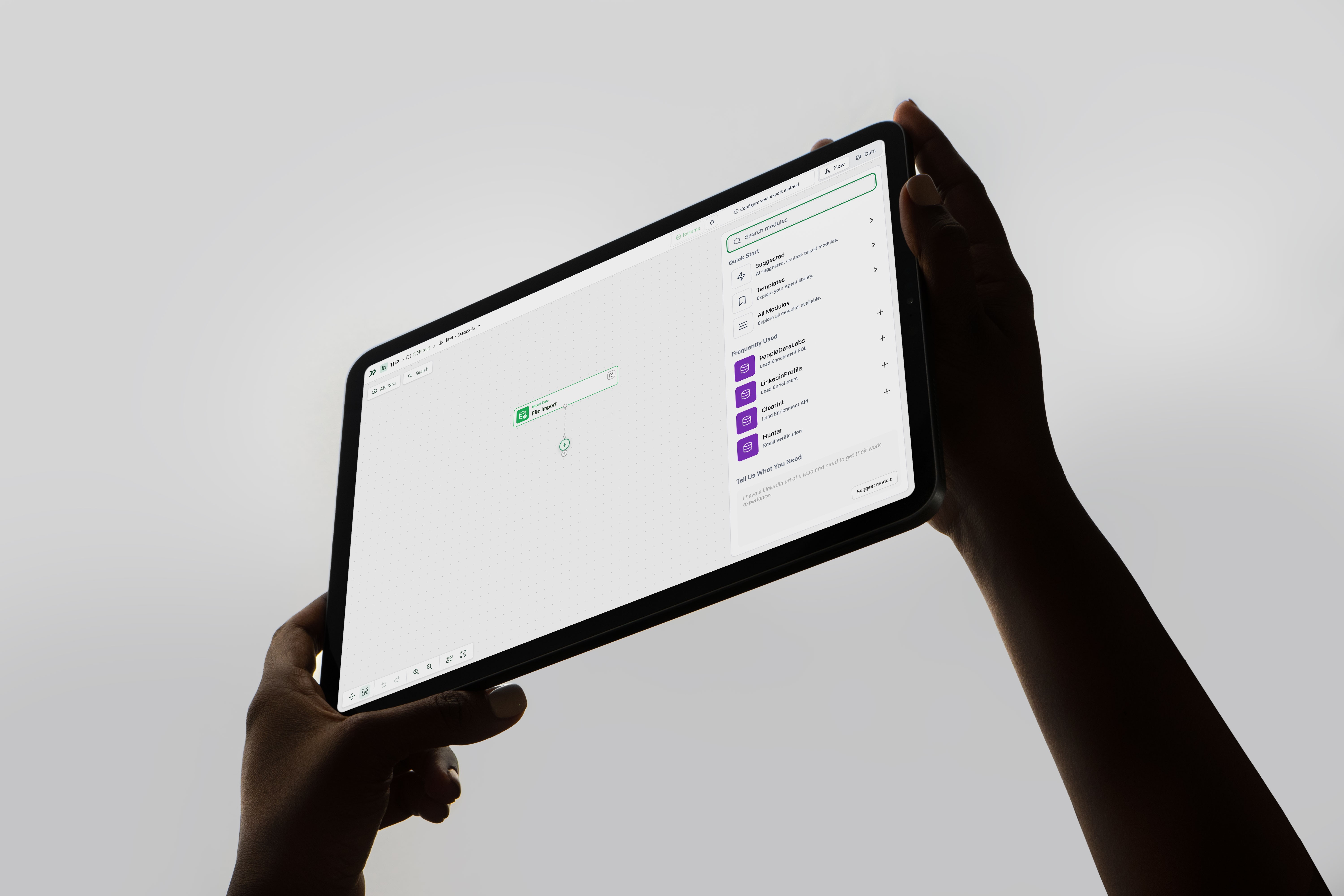
Redesigned a 15-field single page into a guided stepper with progressive disclosure. Scalestack's AI agents handle autonomous decision-making across dozens of integrations, so I had to balance power with accessibility. Added real-time validation and copilot-style refinement. Result: first external customer adoption where none existed before.
Data Management Consolidation
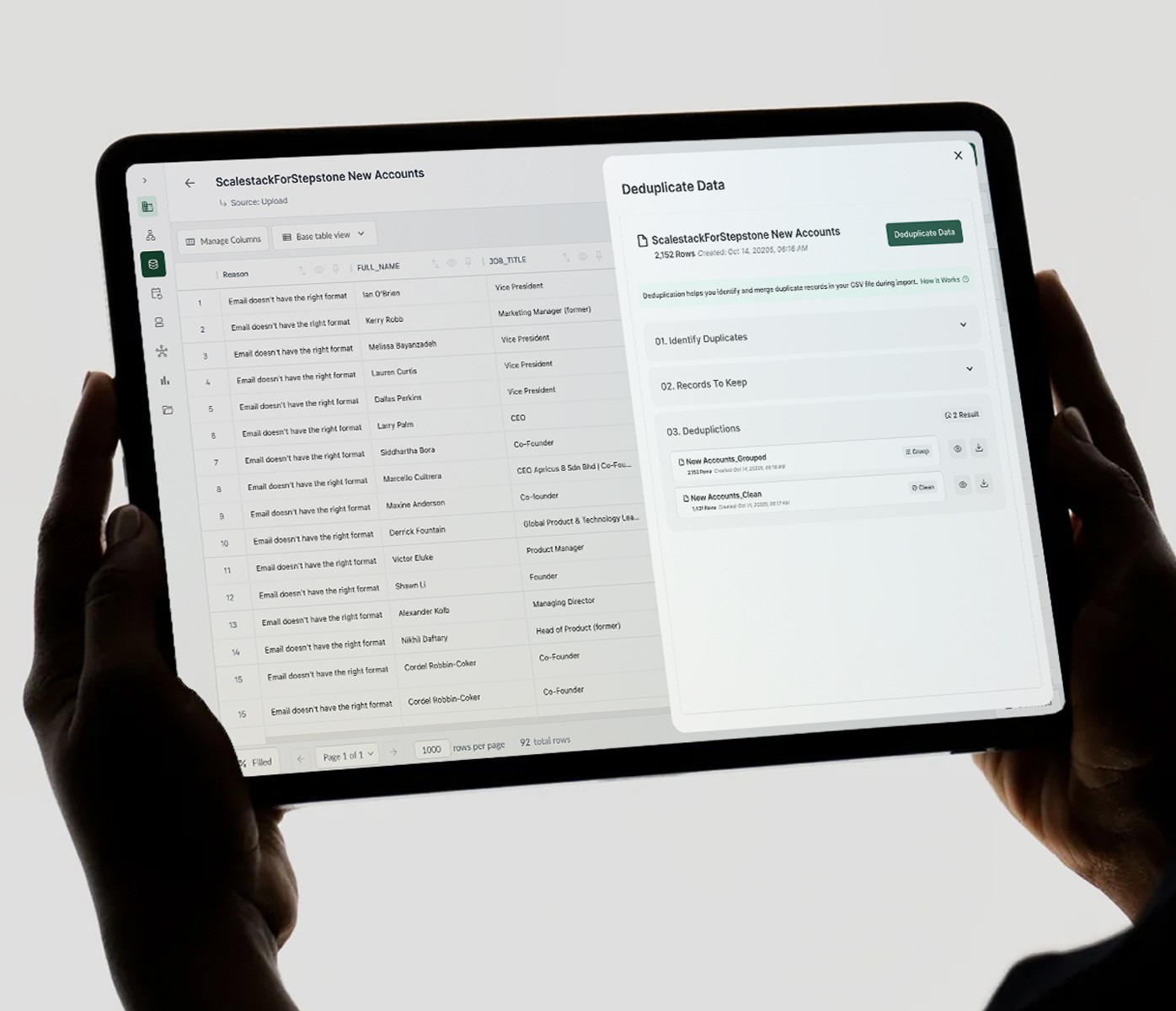
Unified three separate features into one Data Hub with collaboration and saved views. Connected workflow outputs automatically. This eliminated the Google Sheets workaround that was blocking the entire self-serve model.
Real-Time Flow Visibility
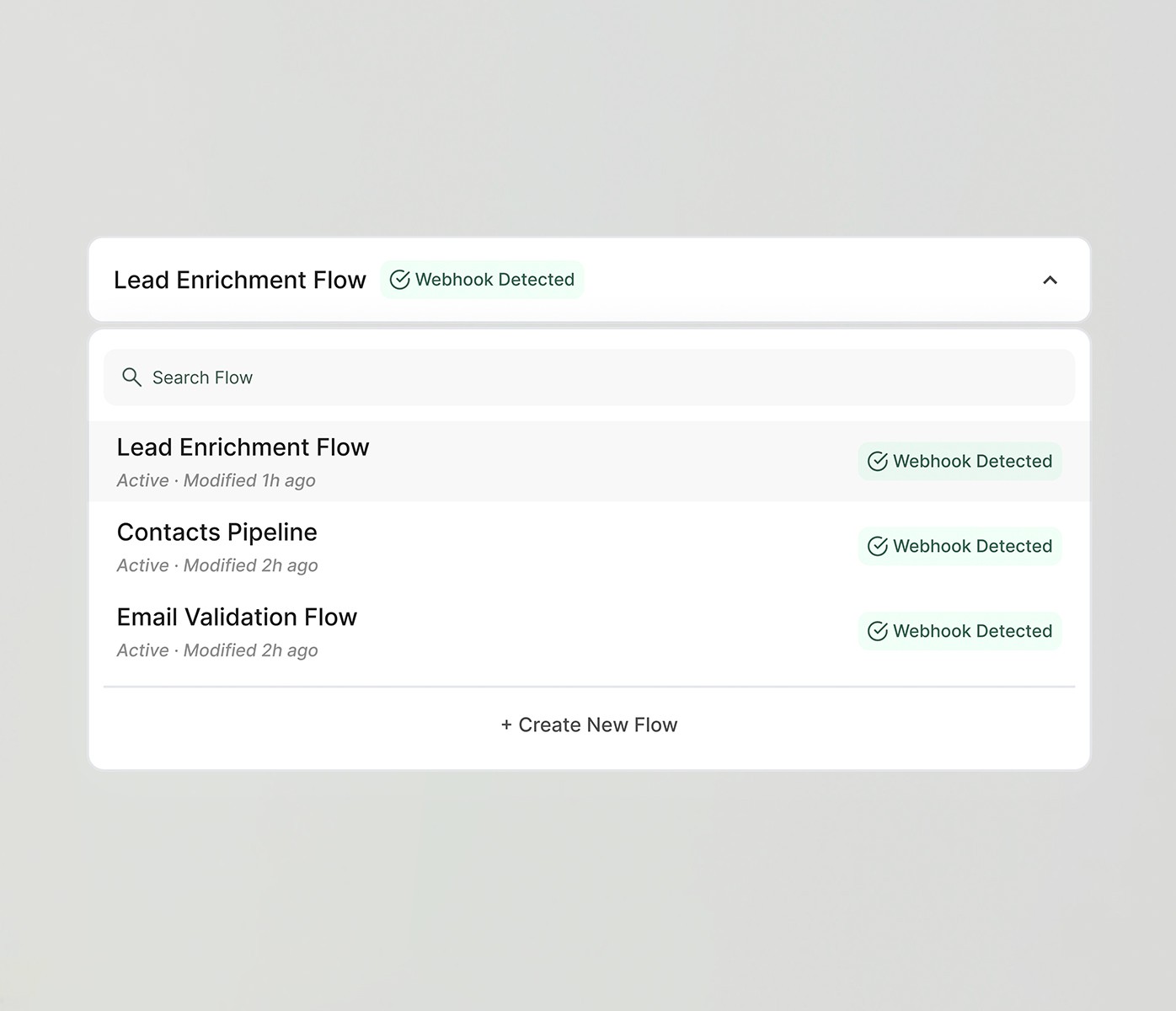
Added live polling, Slack/email notifications, and clear status indicators. Users processing millions of data points needed to trust the AI agents were working. Removed the 15-minute manual check-ins consultants were doing.
Results
Fractional design leadership meant surgical focus on what blocked transformation, not trying to cover everything. Design strategy is knowing what not to work on, so for this AI product it meant making autonomous systems accessible without killing their power. That focus delivered:
Q4 Company Strategic Objectives
Design direction that enabled 83% of quarterly company OKRs. Strategic prioritization focused resources on transformation blockers rather than incremental improvements.
Achieved First External AI Agent Adoption
AI Agent Builder redesign moved from zero external customer usage (only internal demos) to 81% adoption by external customers.
Eliminated Manual Workflow Monitoring
Real-time visibility system removed 15-minute manual check-ins that consultants were doing to monitor workflow status. Automated notifications freed CS team from constant platform surveillance.
Roadmap Prioritization and Impact
Introduced problem-first prioritization framework that focused team on initiatives blocking self-serve transformation. Strategic focus over feature coverage delivered measurable business outcomes vs. shipping incrementally (from 25+ features to 3 high-impact initiatives).
More Work
©2025

Scalestack
Series A
AI
About Scalestack
An AI-powered platform serving Fortune 500 clients like MongoDB, Typeform, and Remote, enabling RevOps teams to build intelligent AI agent workflows for data enrichment and GTM automation at scale.
Business Problem
Scalestack operated as a high-touch consulting service where internal teams built workflows for clients. To scale, they needed to become a self-serve product where RevOps professionals could operate independently. However, zero design maturity created critical adoption barriers:
Design Without Strategy
No design function, user research, or framework connecting decisions to business goals. Features shipped weekly based on ad-hoc decisions rather than validated user needs.
Unusable AI Agents
AI agents autonomously orchestrate data across 60+ integrations and make intelligent routing decisions. The builder interface was so technically complex that only internal teams could use it. Zero external customer adoption blocked the entire business model shift.
Manual Workarounds Required
Despite having a platform, consultants still delivered results via Google Sheets because data management UX was broken. Users couldn't monitor workflow status without checking every 15 minutes.
Strategic Paralysis
With 25+ initiatives on the roadmap and no prioritization model, the team was polishing features rather than unblocking the self-serve transformation the business required.
This created a critical gap: powerful enterprise automation trapped behind interfaces that prevented the business model shift needed to scale.
Role & Leadership Impact
As the first design hire and Fractional Chief Design Officer, I built the design function from zero while delivering immediate business impact through strategic roadmap prioritization and focus.
Strategic Prioritization
Introduced a problem-first framework that mapped all 25 initiatives to business objectives. Made the critical call to focus on 3 high-leverage initiatives that would unblock the entire self-serve transformation rather than polishing 25 existing features.
Design Systems Thinking
Established reusable patterns and component across all initiatives. Built for self-serve scale by ensuring consistency through documented design principles, standardized interactions, and engineering partnership on implementation standards.
Internal Team Mentorship
Evolved the PM from feature spec writer to problem-solver, taught engineering teams user-first language, and advised the CEO on product direction. Built frameworks and processes that outlasted my engagement, enabling successful handoff to incoming full-time designer.
Strategic Solution
I established a problem-first framework requiring user context, competitive analysis, and quality gates. Then focused on three high-impact initiatives:
AI Agent Builder Redesign
Redesigned a 15-field single page into a guided stepper with progressive disclosure. Scalestack's AI agents handle autonomous decision-making across dozens of integrations, so I had to balance power with accessibility. Added real-time validation and copilot-style refinement. Result: first external customer adoption where none existed before.
Data Management Consolidation
Unified three separate features into one Data Hub with collaboration and saved views. Connected workflow outputs automatically. This eliminated the Google Sheets workaround that was blocking the entire self-serve model.
Real-Time Flow Visibility
Added live polling, Slack/email notifications, and clear status indicators. Users processing millions of data points needed to trust the AI agents were working. Removed the 15-minute manual check-ins consultants were doing.
Results
Fractional design leadership meant surgical focus on what blocked transformation, not trying to cover everything. Design strategy is knowing what not to work on, so for this AI product it meant making autonomous systems accessible without killing their power. That focus delivered:
Q4 Company Strategic Objectives
Design direction that enabled 83% of quarterly company OKRs. Strategic prioritization focused resources on transformation blockers rather than incremental improvements.
Achieved First External AI Agent Adoption
AI Agent Builder redesign moved from zero external customer usage (only internal demos) to 81% adoption by external customers.
Eliminated Manual Workflow Monitoring
Real-time visibility system removed 15-minute manual check-ins that consultants were doing to monitor workflow status. Automated notifications freed CS team from constant platform surveillance.
Roadmap Prioritization and Impact
Introduced problem-first prioritization framework that focused team on initiatives blocking self-serve transformation. Strategic focus over feature coverage delivered measurable business outcomes vs. shipping incrementally (from 25+ features to 3 high-impact initiatives).
More Work
©2025
Scalestack
Series A
AI
About Scalestack
An AI-powered platform serving Fortune 500 clients like MongoDB, Typeform, and Remote, enabling RevOps teams to build intelligent AI agent workflows for data enrichment and GTM automation at scale.
Business Problem
Scalestack operated as a high-touch consulting service where internal teams built workflows for clients. To scale, they needed to become a self-serve product where RevOps professionals could operate independently. However, zero design maturity created critical adoption barriers:
Design Without Strategy
No design function, user research, or framework connecting decisions to business goals. Features shipped weekly based on ad-hoc decisions rather than validated user needs.
Unusable AI Agents
AI agents autonomously orchestrate data across 60+ integrations and make intelligent routing decisions. The builder interface was so technically complex that only internal teams could use it. Zero external customer adoption blocked the entire business model shift.
Manual Workarounds Required
Despite having a platform, consultants still delivered results via Google Sheets because data management UX was broken. Users couldn't monitor workflow status without checking every 15 minutes.
Strategic Paralysis
With 25+ initiatives on the roadmap and no prioritization model, the team was polishing features rather than unblocking the self-serve transformation the business required.
This created a critical gap: powerful enterprise automation trapped behind interfaces that prevented the business model shift needed to scale.
Role & Leadership Impact
As the first design hire and Fractional Chief Design Officer, I built the design function from zero while delivering immediate business impact through strategic roadmap prioritization and focus.
Strategic Prioritization
Introduced a problem-first framework that mapped all 25 initiatives to business objectives. Made the critical call to focus on 3 high-leverage initiatives that would unblock the entire self-serve transformation rather than polishing 25 existing features.
Design Systems Thinking
Established reusable patterns and component across all initiatives. Built for self-serve scale by ensuring consistency through documented design principles, standardized interactions, and engineering partnership on implementation standards.
Internal Team Mentorship
Evolved the PM from feature spec writer to problem-solver, taught engineering teams user-first language, and advised the CEO on product direction. Built frameworks and processes that outlasted my engagement, enabling successful handoff to incoming full-time designer.
Strategic Solution
I established a problem-first framework requiring user context, competitive analysis, and quality gates. Then focused on three high-impact initiatives:
AI Agent Builder Redesign
Redesigned a 15-field single page into a guided stepper with progressive disclosure. Scalestack's AI agents handle autonomous decision-making across dozens of integrations, so I had to balance power with accessibility. Added real-time validation and copilot-style refinement. Result: first external customer adoption where none existed before.
Data Management Consolidation
Unified three separate features into one Data Hub with collaboration and saved views. Connected workflow outputs automatically. This eliminated the Google Sheets workaround that was blocking the entire self-serve model.
Real-Time Flow Visibility
Added live polling, Slack/email notifications, and clear status indicators. Users processing millions of data points needed to trust the AI agents were working. Removed the 15-minute manual check-ins consultants were doing.
Results
Fractional design leadership meant surgical focus on what blocked transformation, not trying to cover everything. Design strategy is knowing what not to work on, so for this AI product it meant making autonomous systems accessible without killing their power. That focus delivered:
Q4 Company Strategic Objectives
Design direction that enabled 83% of quarterly company OKRs. Strategic prioritization focused resources on transformation blockers rather than incremental improvements.
Achieved First External AI Agent Adoption
AI Agent Builder redesign moved from zero external customer usage (only internal demos) to 81% adoption by external customers.
Eliminated Manual Workflow Monitoring
Real-time visibility system removed 15-minute manual check-ins that consultants were doing to monitor workflow status. Automated notifications freed CS team from constant platform surveillance.
Roadmap Prioritization and Impact
Introduced problem-first prioritization framework that focused team on initiatives blocking self-serve transformation. Strategic focus over feature coverage delivered measurable business outcomes vs. shipping incrementally (from 25+ features to 3 high-impact initiatives).
More Work
©2025